
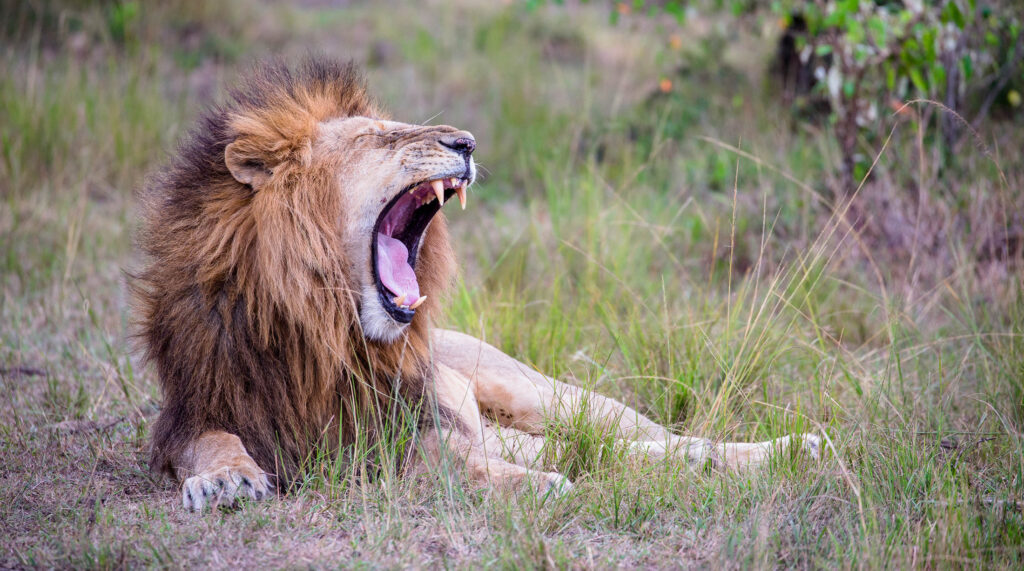

The African lion population has declined by approximately 75% over the last 50 years, plummeting from an estimated 92,000 wild individuals in 1970 to around 20,000–25,000 today. Alongside this population crash, wild lions have been driven out of 87% to 94% of their historical geographic range, leaving their remaining populations heavily fragmented across sub-Saharan Africa.
The development, drivers, and regional differences of this decline over the last five decades include several key factors:
Key Drivers of the Decline
-
- Habitat Loss and Fragmentation: Sub-Saharan Africa’s human population has surged over the past 50 years, causing massive conversion of natural savannahs into agricultural farms and livestock pastures.
- Human-Wildlife Conflict: As human settlements expand into lion territory, lions frequently prey on cattle and livestock. In retaliation, pastoralists and farmers kill lions using guns, traps, or carcasses laced with poison.
- Prey Depletion: The commercial bushmeat trade and illegal poaching have severely depleted populations of wild herbivores like zebras and wildebeests, leaving lions with a drastically reduced natural food source.
A Tale of Two Africas: Regional Differences
The demographic trend of the African lion has diverged sharply based on geography and local conservation management strategies:
-
- West, Central, and East Africa (Severe Decline): West and Central African lion populations have collapsed by roughly 87%. Lions are now considered critically endangered or extinct across many countries in these regions. East Africa, traditionally a stronghold, has also seen a 65% drop due to free-roaming lions overlapping with growing human populations.
- Southern Africa (Stable to Increasing): In stark contrast, lion numbers in countries like South Africa, Botswana, Namibia, and Zimbabwe have remained stable or are actively growing. This is primarily because southern African lions are heavily protected within fenced, intensively managed, and well-funded national parks and private game reserves.
Conservation Status Today
The International Union for Conservation of Nature (IUCN) currently classifies the African lion as Vulnerable on its Red List of Threatened Species. However, wildlife biologists warn that if immediate protective actions and sustainable human-lion cohabitation models are not expanded across the continent, West and East Africa could lose half of their remaining wild populations within the next two decades
