
Sights on our safaris
Wildlife
Our Packages
Practical information
Accomodation
Nairobi
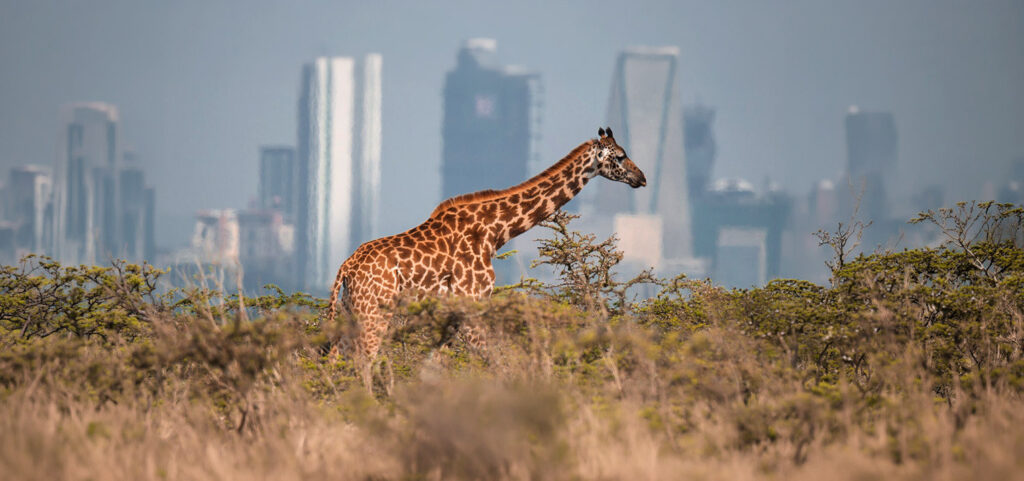
- High-Altitude Setting: The city sits at an elevation of 1,795 meters above sea level, providing a surprisingly cool, comfortable, and temperate climate year-round.
- The Safari Hub: Strategically located in the southern-central part of the country, it serves as the central jumping-off point for flights and road transfers to the Maasai Mara, Amboseli, and Laikipia.
- Nairobi National Park: This 117-square-kilometer reserve is located just seven kilometers from the city skyscrapers. It is home to lions, leopards, cheetahs, buffaloes, and over 400 bird species, offering the iconic visual contrast of wildlife roaming in front of an urban skyline.
- Rhino Stronghold: The city’s national park is one of Kenya’s most successful sanctuaries for breeding and protecting endangered black rhinoceroses.
- The David Sheldrick Wildlife Trust: A globally renowned orphan elephant rescue and rehabilitation program, where visitors can watch young elephant calves being bottle-fed and playing in the mud.
- The Giraffe Centre: A dedicated sanctuary aimed at breeding the endangered Rothschild’s giraffe, allowing travelers the rare chance to hand-feed these gentle giants from a raised observation platform.
- Karen Blixen Museum: The historic farmhouse of the famous Danish author of Out of Africa, offering a glimpse into Kenya’s colonial history at the foot of the Ngong Hills.
Masai Mara National Reserve
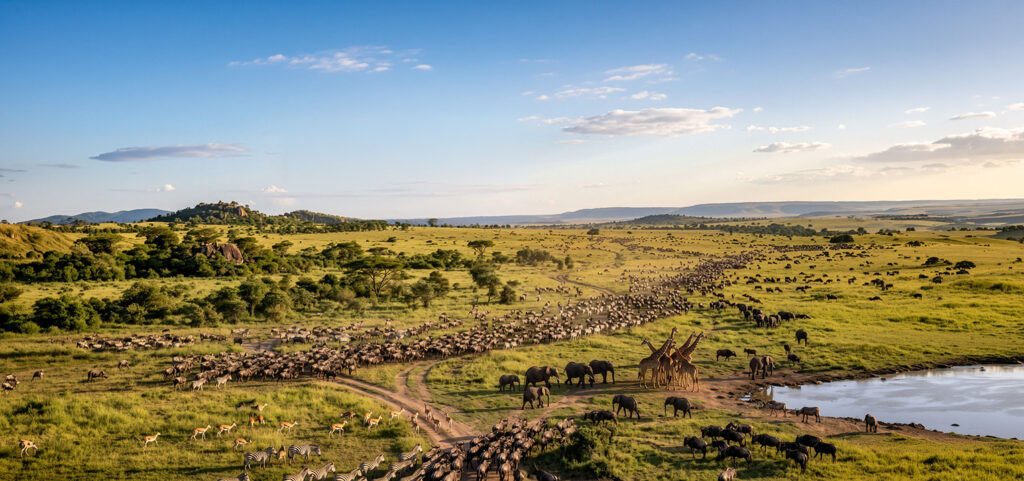
The extraordinary factors that make the Maasai Mara an unparalleled natural wonder include:
The Greatest Wildlife Show on Earth
- The Great Migration: Every year between July and October, over 1.5 million wildebeest, 400,000 zebras, and 200,000 gazelles travel from the Serengeti into the Maasai Mara. This movement creates the largest overland mammal migration on the planet.
- The Mara River Crossings: The defining spectacle of the migration occurs when herds plunge into the crocodile-infested Mara River. This dramatic event showcases raw survival, natural instincts, and high-stakes predator-prey dynamics.
Unrivaled Predator Concentrations
- The Big Three Cats: The Mara boasts one of the highest densities of lions, leopards, and cheetahs in the world. It serves as the filming location for famous wildlife documentaries, including the BBC’s Big Cat Diary.
- Vibrant Ecosystem Dynamics: Large prides of lions, elusive leopards in the riverine forests, and cheetahs hunting on the open savannah thrive alongside massive clans of spotted hyenas and jackals.
Pristine Landscapes and Biodiversity
- Classic African Savannah: The landscape features iconic, wide-open grasslands dotted with solitary acacia trees, offering unobstructed views of grazing herds under vast African skies.
- The African Big Five: Visitors routinely view all members of the legendary Big Five—lions, leopards, African elephants, Cape buffalos, and black rhinos—often within a single game drive.
- Avian Paradise: Over 470 bird species live in the reserve, including 47 different birds of prey, giant ostriches, elegant secretary birds, and vibrant lilac-breasted rollers.
The Maasai People and Cultural Coexistence
- Community-Led Conservation: The Maasai Mara is named in honor of the Maasai people, the ancestral inhabitants of the land. The word Mara means “spotted” in the Maa language, describing the landscape’s mix of trees, cloud shadows, and savanna.
- Wildlife Conservancies: Surrounding the core reserve are private conservancies managed jointly by safari operators and local Maasai landowners. This model ensures tourism revenues directly fund local schools, healthcare, and sustainable livestock grazing, creating a successful blueprint for human-wildlife harmony.
World-Class Eco-Tourism
- Low-Impact Safari Lodges: The Mara offers a range of eco-friendly accommodations, from high-end luxury tented camps to sustainable bush lodges that leave zero environmental footprint.
- Hot Air Balloon Safaris: Drifting over the plains at dawn provides a unique aerial view of the waking savannah and the massive migratory herds moving below.
Samburu National Reserve
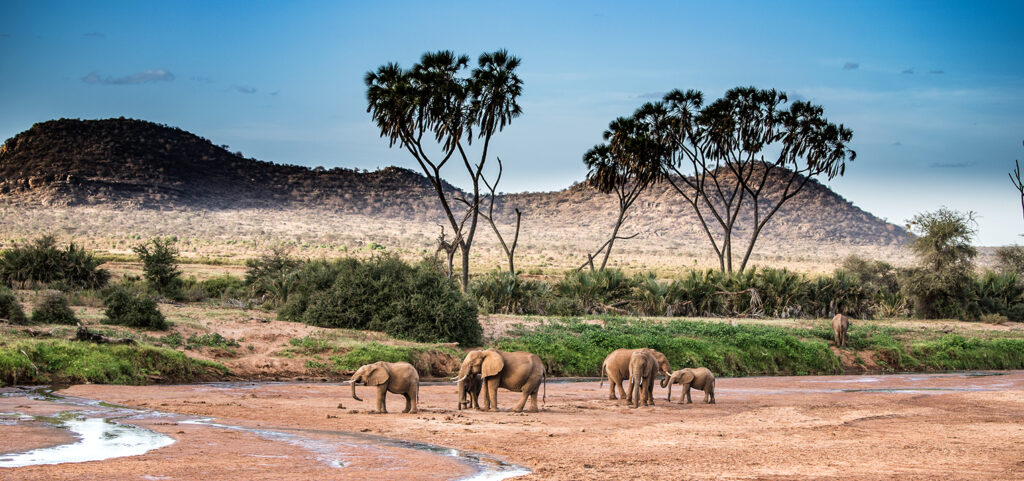
Samburu is a raw, rugged, and strikingly beautiful desert wilderness located in Kenya’s remote northern frontier. Centered around the life-giving Ewaso Nyiro River, this arid region comprises three adjacent reserves: Samburu, Buffalo Springs, and Shaba. It offers a dramatic contrast to the classic green savannahs of southern Kenya, presenting travelers with a semi-desert landscape of rust-red soil, doum palms, volcanic cones, and flat-topped acacia trees.
Geography and the Oasis Ecosystem
- The Desert Lifeline: The brown, muddy waters of the Ewaso Nyiro River run directly through the dusty plains. This permanent water source acts as an absolute magnet for wildlife, making riverbank game drives exceptionally rewarding.
- Arid Splendor: The scenery is dominated by dramatic geological features, including the imposing table Mountain known as Ol Olokwe, which rises sharply out of the surrounding desert scrub.
- Warm and Dry Climate: Being near the equator and at a lower altitude, Samburu is consistently hot and dry, making the shaded riverine forests a cool sanctuary for both animals and safari travelers.
The Famous “Samburu Special Five”
Because of its unique, arid environment, Samburu is home to a specific group of rare, climate-adapted wildlife species that cannot be found in Kenya’s southern parks like the Maasai Mara.
Reticulated Giraffe: Strikingly beautiful with sharp, clean, block-like geometric patterns.
- Grevy’s Zebra: The world’s largest wild equid, featuring narrow stripes, a white belly, and large, rounded ears.
- Somali Ostrich: Distinct from the common ostrich due to the striking indigo-blue skin on its neck and legs.
- Gerenuk: A fascinating, long-necked gazelle that stands completely upright on its hind legs to forage from high acacia branches.
- Beisa Oryx: A majestic antelope sporting long, rapier-like horns and elegant black-and-white facial markings.
Premium Predator and Large Mammal Sightings
Beyond its unique specialists, Samburu delivers high-density encounters with Africa’s iconic large game.
Elephant Hotspot: The region is world-famous for its massive herds of red-dust-covered elephants that regularly cross, bathe, and play in the Ewaso Nyiro River.
- Big Cat Capital: The dense riverine bush provides the perfect camouflage for thriving populations of lions, cheetahs, and exceptionally relaxed leopards.
- Birding Abundance: Over 450 bird species thrive here, from the brilliant vulturine guineafowl to giant martial eagles nesting in the riverside trees.
Rich Cultural Heritage
A stop in Samburu introduces an invaluable cultural dimension to a safari package. The area is home to the proud, nomadic Samburu people, who are close relatives of the Maasai. Visitors have the opportunity to learn about their traditional lifestyle, vibrant beaded jewelry, and deep-rooted harmony with the harsh desert environment.
Lake Nakuru
Geography and Ecosystem Shifts
- The Alkaline Basin: Situated a three-hour drive from Nairobi, Lake Nakuru has no natural outlet. This creates a highly sensitive chemical environment that supports unique blue-green algae.
- The “Freshwater Pivot”: High water levels have significantly expanded the lake’s boundaries. This flooding has created a striking “ghost forest” of submerged acacia trees along the northern tracks, shifting wildlife behavior to higher sectors.
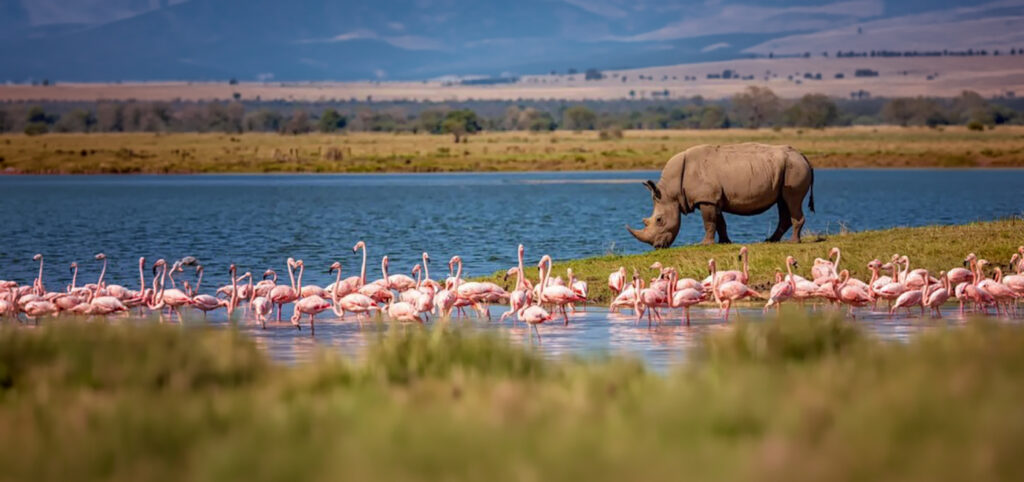
- Changing Horizons: The rising water has diluted the lake’s salinity, causing its iconic, massive flamingo populations to fluctuate and occasionally move to neighboring lakes. However, the diluted water has introduced tilapia fish, drawing a massive influx of pelicans, cormorants, and majestic African fish eagles.
Premium Big Game and Rhino Sightings
- Kenya’s Premier Rhino Sanctuary: Lake Nakuru National Park is one of the country’s most successful sanctuaries for both black and white rhinoceroses. Seeing these prehistoric giants grazing along the lakeshore plains is a regular highlight. [1]
- The Tree-Climbing Lions: The park is famous for its unique population of lions that regularly climb and rest in the branches of acacia trees. Elusive leopards also heavily utilize the submerged tree branches of the flooded shoreline for hunting.
- Rare Rothschild’s Giraffes: The park serves as a vital breeding stronghold for the endangered Rothschild’s giraffe, which thrives alongside massive herds of buffalo, waterbuck, zebra, and baboons.
Classic Driving and Viewpoint Safaris
- Baboon Cliff Viewpoint: A spectacular elevated ridge that provides a sweeping, panoramic view over the entire lake basin, perfect for photography at sunset.
- Lakeshore Game Drives: Classic 4×4 tracks hug the changing shoreline, offering front-row views of rhinos, waterbirds, and predators moving seamlessly between the woodlands and the water.
Laikipia Wilderness
Geography and Landscape
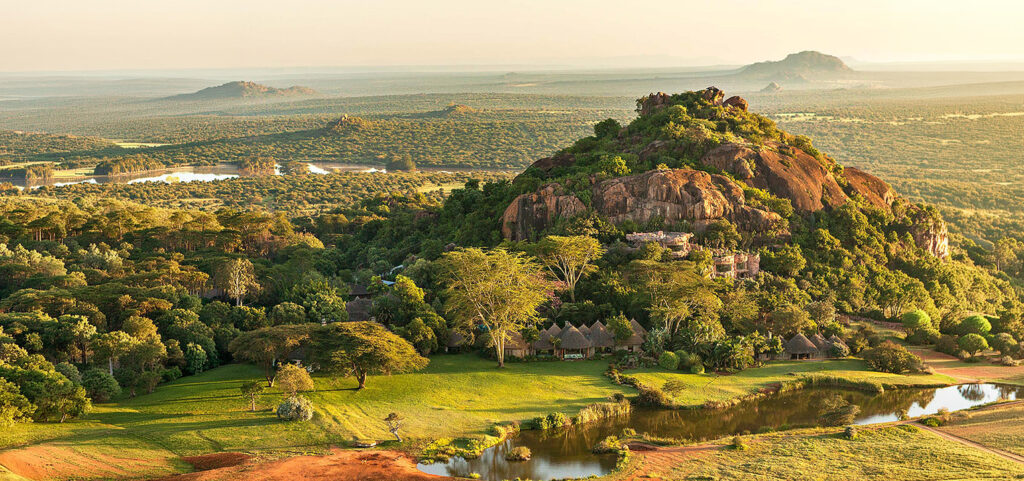
- Varied Terrain: The region sits at a high altitude, featuring open savannahs, dramatic basalt hills, deep river valleys, and dense riverine forests.
- Climate: The elevation creates a comfortable, temperate, and relatively dry climate with cool evenings.
- Ecosystem: This plateau serves as a vital, unfenced migratory corridor for wildlife moving through northern Kenya.
- The Northern Special Five: It is home to unique arid-adapted species, including the reticulated giraffe, Grevy’s zebra, Somali ostrich, gerenuk, and Beisa oryx.
- Rhino Sanctuary: The region is East Africa’s most critical haven for the recovery of the endangered black rhino.
- Predators: The landscape supports healthy populations of lions, leopards, and cheetahs, and is one of the best places in Africa to see the rare African wild dog.
- Night Game Drives: The opportunity to explore after dark with spotlights to seek out elusive, nocturnal predators.
- Walking Safaris: Guided bush walks that allow you to track wildlife on foot and learn about the smaller ecosystem details.
- Alternative Travel: Unique options to experience the wilderness on horseback, by camel trek, or alongside researchers tracking collared lions and wild dogs.
Lake Naivaisha
Geography and Landscape
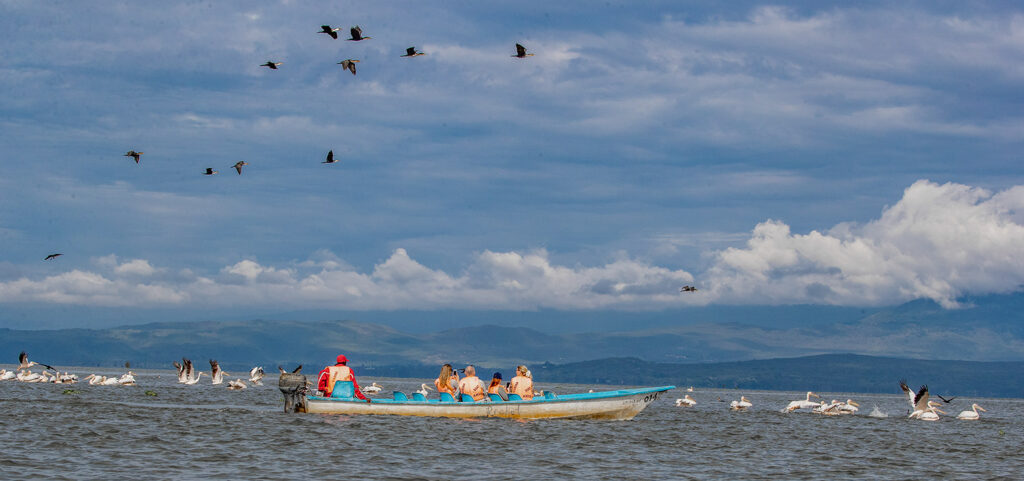
- The Freshwater Oasis: The lake covers roughly 139 square kilometers, though its size fluctuates significantly depending on seasonal rainfall.
- Dramatic Surroundings: It is flanked by the towering Mount Longonot, a dormant volcano, and is bordered by dense papyrus swamps and iconic fever tree forests.
- Proximity to Nairobi: Located just a two-hour drive from Kenya’s capital, it serves as a tranquil, scenic transition point between the city and the deeper safari circuits.
Diverse Wildlife and Birdlife
- Hippo Capital: The lake is home to a massive population of over 1,500 hippos, which can easily be seen cooling off in the water by day and grazing on the shores at night.
- Birdwatcher’s Paradise: With over 400 recorded bird species, it is a world-class birding destination. Highlights include African fish eagles, pelicans, herons, and kingfishers.
- Crescent Island: This sunken volcanic crater forms a private game sanctuary inside the lake. Because there are no predators, it is one of the few places in Kenya where travelers can safely walk alongside giraffes, zebras, waterbucks, and wildebeests.
Classic Activities Included in the Area
- Boat Safaris: Relaxing boat cruises that bring travelers close to hippo pods and offer front-row views of diving fish eagles.
- Walking Safaris on Crescent Island: An intimate, guided foot safari surrounded by free-roaming herds, famous as a filming location for Out of Africa.
- Hell’s Gate National Park: Located just alongside the lake, this park allows visitors to hike or ride mountain bikes past towering cliffs, geothermal steam plumes, and deep volcanic gorges.
Amboseli National Park
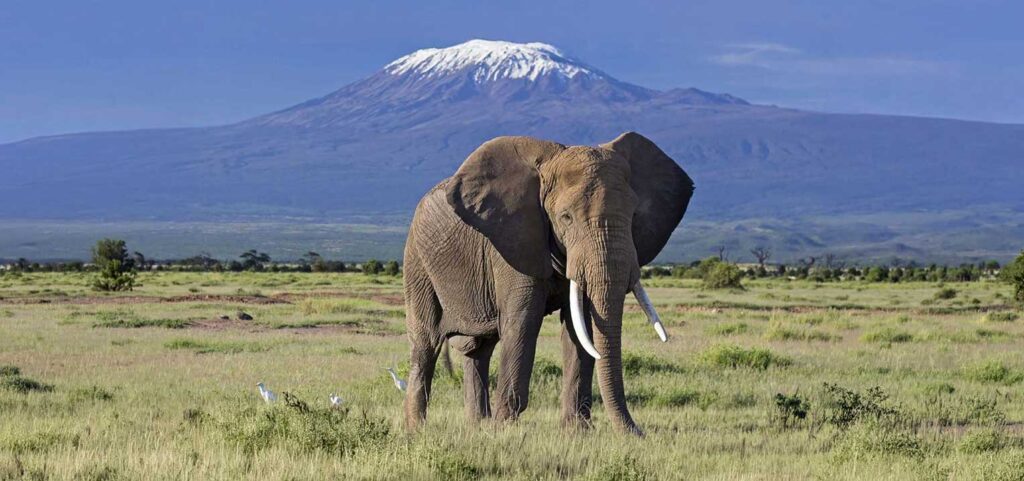
The Amboseli National Park in Kenya is globally recognized as one of the most spectacular, biodiverse, and visually stunning wildlife destinations on Earth. Spanning roughly 392 square kilometers (151 square miles) of pristine wilderness, it sits at the core of an 8,000-square-kilometer ecosystem that spreads across the Kenya-Tanzania border. The extraordinary factors that make Amboseli an unparalleled natural wonder include:
- The World’s Best Elephant Viewing: Amboseli is world-renowned for being the best place in Africa to get up close to free-ranging elephants. It is home to massive herds of elephants, including some of the continent’s last remaining “super tuskers”—elephants with tusks so long they touch the ground.
- The Shadow of Kilimanjaro: The defining spectacle of Amboseli is its unmatched backdrop. The park offers the most iconic, unobstructed views of Mount Kilimanjaro, the highest free-standing mountain in the world, whose snow-capped peaks tower dramatically over the savannah.
- The Lifegiving Swamps: Fed by underground springs from Mount Kilimanjaro, permanent swamps like Enkongo Narok and Olokenya create lush green oases in an otherwise arid landscape. These waterscapes draw thousands of hippos, elephants, and waterbirds during the dry season.
- The Dried Pleistocene Lake: Contrastingly, the park encompasses the dried-up bed of Lake Amboseli. This vast, shimmering salt pan creates surreal mirages during the heat of the day and offers a completely different, starkly beautiful terrain.
- Striking Contrasts: The landscape features an extraordinary mix of five distinct habitats: open plains, acacia woodlands, rocky thorn bushes, swamps, and the dry lake bed, offering photographers an unrivaled variety of visual backdrops.
- Rich Wildlife Populations: Beyond its famous elephants, visitors routinely view an abundance of wildlife, including Cape buffalos, lions, cheetahs, spotted hyenas, giraffes, zebras, and wildebeests thriving across the plains.
- Avian Paradise: Over 400 bird species live in the park. The marshes provide a haven for waterbirds like pelicans, kingfishers, African fish eagles, and elegant lesser flamingos that paint the wetlands pink.
- Community-Led Conservation: Amboseli is named after the Maa word Empusel, meaning “salty, dusty place,” describing the unique soil of the lake bed. The land is the ancestral home of the Maasai people, who continue to live along the park’s borders.
- Group Ranches and Conservancies: Surrounding the core park are community-owned Maasai group ranches. These conservancies allow the local Maasai people to benefit directly from eco-tourism, securing vital wildlife migratory corridors while supporting local education, healthcare, and traditional pastoral lifestyles.
- Low-Impact Safari Lodges: Amboseli offers an exceptional range of eco-friendly accommodations, featuring luxury tented camps and lodges that blend seamlessly into the environment and run on sustainable solar power.
- Photographic Safaris: The combination of low-set vegetation, predictable wildlife gathering around the swamps, and the dramatic backdrop of Mount Kilimanjaro makes Amboseli a world-class destination for professional and amateur wildlife photographers alike.