
Sights on this Safari
Nairobi
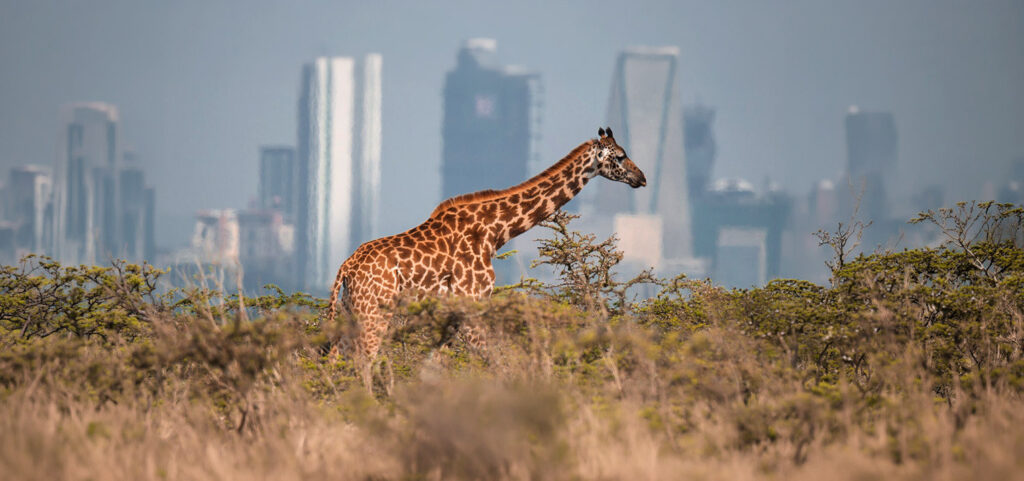
Nairobi is Kenya’s vibrant capital and the undisputed safari gateway to East Africa. Known affectionately as the “Green City in the Sun,” it is a bustling metropolis uniquely defined by its blend of urban energy and rich wildlife heritage. It stands as the only city in the world that features a fully functioning national park right on its doorstep, making it a vital and fascinating introduction to any Kenyan safari itinerary.
Geography and Climate
- High-Altitude Setting: The city sits at an elevation of 1,795 meters above sea level, providing a surprisingly cool, comfortable, and temperate climate year-round.
- The Safari Hub: Strategically located in the southern-central part of the country, it serves as the central jumping-off point for flights and road transfers to the Maasai Mara, Amboseli, and Laikipia.
The Urban Wilderness
Nairobi offers a rare opportunity to transition seamlessly from cosmopolitan city life to authentic African wildlife viewing within minutes.
- Nairobi National Park: This 117-square-kilometer reserve is located just seven kilometers from the city skyscrapers. It is home to lions, leopards, cheetahs, buffaloes, and over 400 bird species, offering the iconic visual contrast of wildlife roaming in front of an urban skyline.
- Rhino Stronghold: The city’s national park is one of Kenya’s most successful sanctuaries for breeding and protecting endangered black rhinoceroses.
Key Conservation and Cultural Highlights
A stay in Nairobi enriches a travel package by offering deep, up-close insights into world-famous conservation initiatives.
- The David Sheldrick Wildlife Trust: A globally renowned orphan elephant rescue and rehabilitation program, where visitors can watch young elephant calves being bottle-fed and playing in the mud.
- The Giraffe Centre: A dedicated sanctuary aimed at breeding the endangered Rothschild’s giraffe, allowing travelers the rare chance to hand-feed these gentle giants from a raised observation platform.
- Karen Blixen Museum: The historic farmhouse of the famous Danish author of Out of Africa, offering a glimpse into Kenya’s colonial history at the foot of the Ngong Hills.
Masai Mara National Reserve
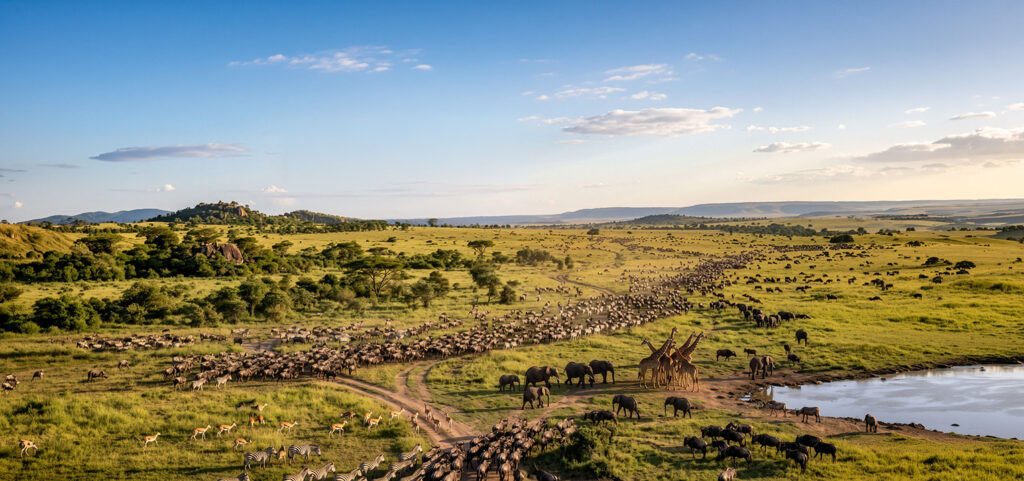
The Maasai Mara National Reserve in Kenya is globally recognized as one of the most spectacular, biodiverse, and culturally significant wildlife destinations on Earth. Spanning roughly 1,510 square kilometers (583 square miles) of pristine wilderness, it forms a single, unfenced ecosystem with Tanzania’s Serengeti National Park.
The extraordinary factors that make the Maasai Mara an unparalleled natural wonder include:
The Greatest Wildlife Show on Earth
-
- The Great Migration: Every year between July and October, over 1.5 million wildebeest, 400,000 zebras, and 200,000 gazelles travel from the Serengeti into the Maasai Mara. This movement creates the largest overland mammal migration on the planet.
- The Mara River Crossings: The defining spectacle of the migration occurs when herds plunge into the crocodile-infested Mara River. This dramatic event showcases raw survival, natural instincts, and high-stakes predator-prey dynamics.
Unrivaled Predator Concentrations
-
- The Big Three Cats: The Mara boasts one of the highest densities of lions, leopards, and cheetahs in the world. It serves as the filming location for famous wildlife documentaries, including the BBC’s Big Cat Diary.
- Vibrant Ecosystem Dynamics: Large prides of lions, elusive leopards in the riverine forests, and cheetahs hunting on the open savannah thrive alongside massive clans of spotted hyenas and jackals.
Pristine Landscapes and Biodiversity
-
- Classic African Savannah: The landscape features iconic, wide-open grasslands dotted with solitary acacia trees, offering unobstructed views of grazing herds under vast African skies.
- The African Big Five: Visitors routinely view all members of the legendary Big Five—lions, leopards, African elephants, Cape buffalos, and black rhinos—often within a single game drive.
- Avian Paradise: Over 470 bird species live in the reserve, including 47 different birds of prey, giant ostriches, elegant secretary birds, and vibrant lilac-breasted rollers.
The Maasai People and Cultural Coexistence
-
- Community-Led Conservation: The Maasai Mara is named in honor of the Maasai people, the ancestral inhabitants of the land. The word Mara means “spotted” in the Maa language, describing the landscape’s mix of trees, cloud shadows, and savanna.
- Wildlife Conservancies: Surrounding the core reserve are private conservancies managed jointly by safari operators and local Maasai landowners. This model ensures tourism revenues directly fund local schools, healthcare, and sustainable livestock grazing, creating a successful blueprint for human-wildlife harmony.
World-Class Eco-Tourism
-
- Low-Impact Safari Lodges: The Mara offers a range of eco-friendly accommodations, from high-end luxury tented camps to sustainable bush lodges that leave zero environmental footprint.
- Hot Air Balloon Safaris: Drifting over the plains at dawn provides a unique aerial view of the waking savannah and the massive migratory herds moving below.
Laikipia Wilderness
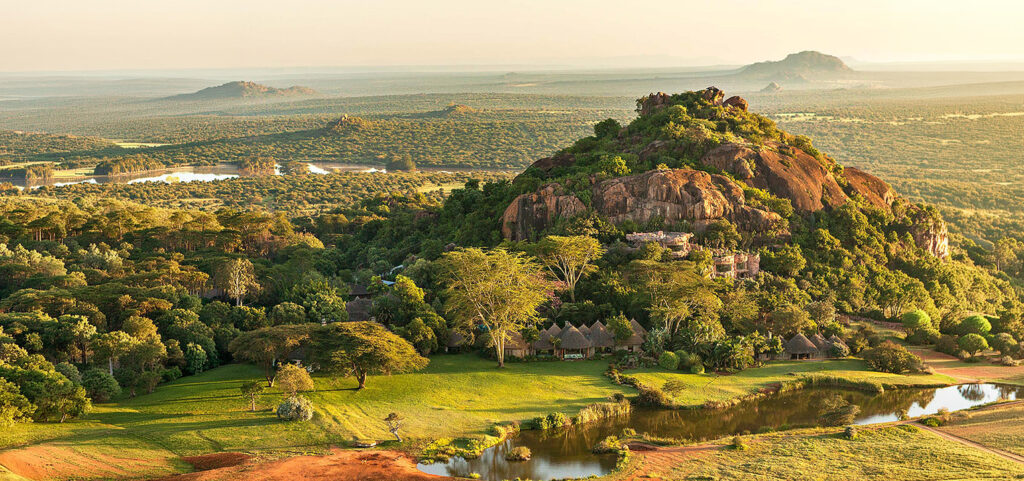
Laikipia is one of Kenya’s most distinct and compelling wilderness areas. Stretching from the foothills of Mount Kenya to the edge of the Great Rift Valley, this vast plateau operates differently from traditional national parks. Instead, it consists of a massive network of private ranches, community-owned lands, and private wildlife conservancies.
Geography and Landscape
- Varied Terrain: The region sits at a high altitude, featuring open savannahs, dramatic basalt hills, deep river valleys, and dense riverine forests.
- Climate: The elevation creates a comfortable, temperate, and relatively dry climate with cool evenings.
- Ecosystem: This plateau serves as a vital, unfenced migratory corridor for wildlife moving through northern Kenya.
Unique Wildlife
Laikipia is celebrated for its rich biodiversity and serves as a stronghold for several rare species rarely found in the southern parks of East Africa.
- The Northern Special Five: It is home to unique arid-adapted species, including the reticulated giraffe, Grevy’s zebra, Somali ostrich, gerenuk, and Beisa oryx.
- Rhino Sanctuary: The region is East Africa’s most critical haven for the recovery of the endangered black rhino.
- Predators: The landscape supports healthy populations of lions, leopards, and cheetahs, and is one of the best places in Africa to see the rare African wild dog.
Flexible Safari Activities
Because the land is privately and communally managed rather than state-run, a safari itinerary in Laikipia offers exclusive activities that are typically restricted in standard national parks:
- Night Game Drives: The opportunity to explore after dark with spotlights to seek out elusive, nocturnal predators.
- Walking Safaris: Guided bush walks that allow you to track wildlife on foot and learn about the smaller ecosystem details.
- Alternative Travel: Unique options to experience the wilderness on horseback, by camel trek, or alongside researchers tracking collared lions and wild dogs.
Communities and Conservation
Sustainability forms the backbone of Laikipia. Most conservancies blend wildlife protection with sustainable cattle ranching and work in close partnership with local Samburu and Maasai communities. This ensures tourism directly funds local education, healthcare, and conservation, providing an authentic look into how people and wildlife coexist.
Lake Naivasha
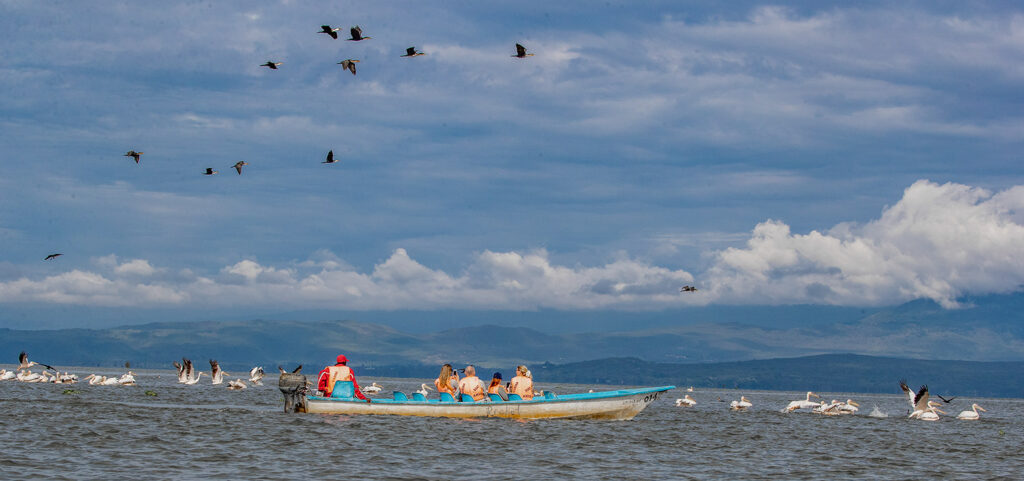
Lake Naivasha is a stunning freshwater lake nestled in the Great Rift Valley. Situated at an altitude of 1,884 meters, it is the highest lake in the Rift Valley system and is uniquely surrounded by volcanic landscapes, yellow-barked acacia forests, and dramatic mountain backdrops. Unlike its alkaline neighbors, Lake Naivasha’s fresh water supports an incredibly lush and vibrant ecosystem.
Geography and Landscape
- The Freshwater Oasis: The lake covers roughly 139 square kilometers, though its size fluctuates significantly depending on seasonal rainfall.
- Dramatic Surroundings: It is flanked by the towering Mount Longonot, a dormant volcano, and is bordered by dense papyrus swamps and iconic fever tree forests.
- Proximity to Nairobi: Located just a two-hour drive from Kenya’s capital, it serves as a tranquil, scenic transition point between the city and the deeper safari circuits.
Diverse Wildlife and Birdlife
While Lake Naivasha does not host the traditional big cats, its unique habitat offers spectacular encounters with aquatic and avian species.
- Hippo Capital: The lake is home to a massive population of over 1,500 hippos, which can easily be seen cooling off in the water by day and grazing on the shores at night.
- Birdwatcher’s Paradise: With over 400 recorded bird species, it is a world-class birding destination. Highlights include African fish eagles, pelicans, herons, and kingfishers.
- Crescent Island: This sunken volcanic crater forms a private game sanctuary inside the lake. Because there are no predators, it is one of the few places in Kenya where travelers can safely walk alongside giraffes, zebras, waterbucks, and wildebeests.
Classic Activities Included in the Area
A stop at Lake Naivasha enriches a safari package by introducing water-based exploration and active, on-foot adventures.
- Boat Safaris: Relaxing boat cruises that bring travelers close to hippo pods and offer front-row views of diving fish eagles.
- Walking Safaris on Crescent Island: An intimate, guided foot safari surrounded by free-roaming herds, famous as a filming location for Out of Africa.
- Hell’s Gate National Park: Located just alongside the lake, this park allows visitors to hike or ride mountain bikes past towering cliffs, geothermal steam plumes, and deep volcanic gorges.